
What Is a Tier IV Data Centre? Australia's Highest Standard of Uptime, Explained
12 Jun 2026, by James Braunegg, CEO and Founder, Micron21
If your business runs online (and today, whose doesn’t?), the building your infrastructure lives in matters far more than most people realise. Your website, your applications, your data and your customers’ trust all ultimately depend on physical things: power, cooling, fibre and the engineering philosophy of the facility that houses them.
Tier IV is the highest rating a data centre can achieve under the Uptime Institute’s globally recognised tier classification system. In plain English, it means the facility is fault tolerant: no single piece of infrastructure can fail and take customer workloads down with it. It is the standard demanded by government departments, financial institutions and any organisation for whom downtime is simply not an option.
In this article I’ll explain exactly what Tier IV requires, how it differs from Tier III (the gap is far bigger than most people think), and share a little of the story of how Micron21 became the first data centre in Australia to achieve Uptime Institute Tier IV design certification.
How a Melbourne data centre beat the giants to Tier IV
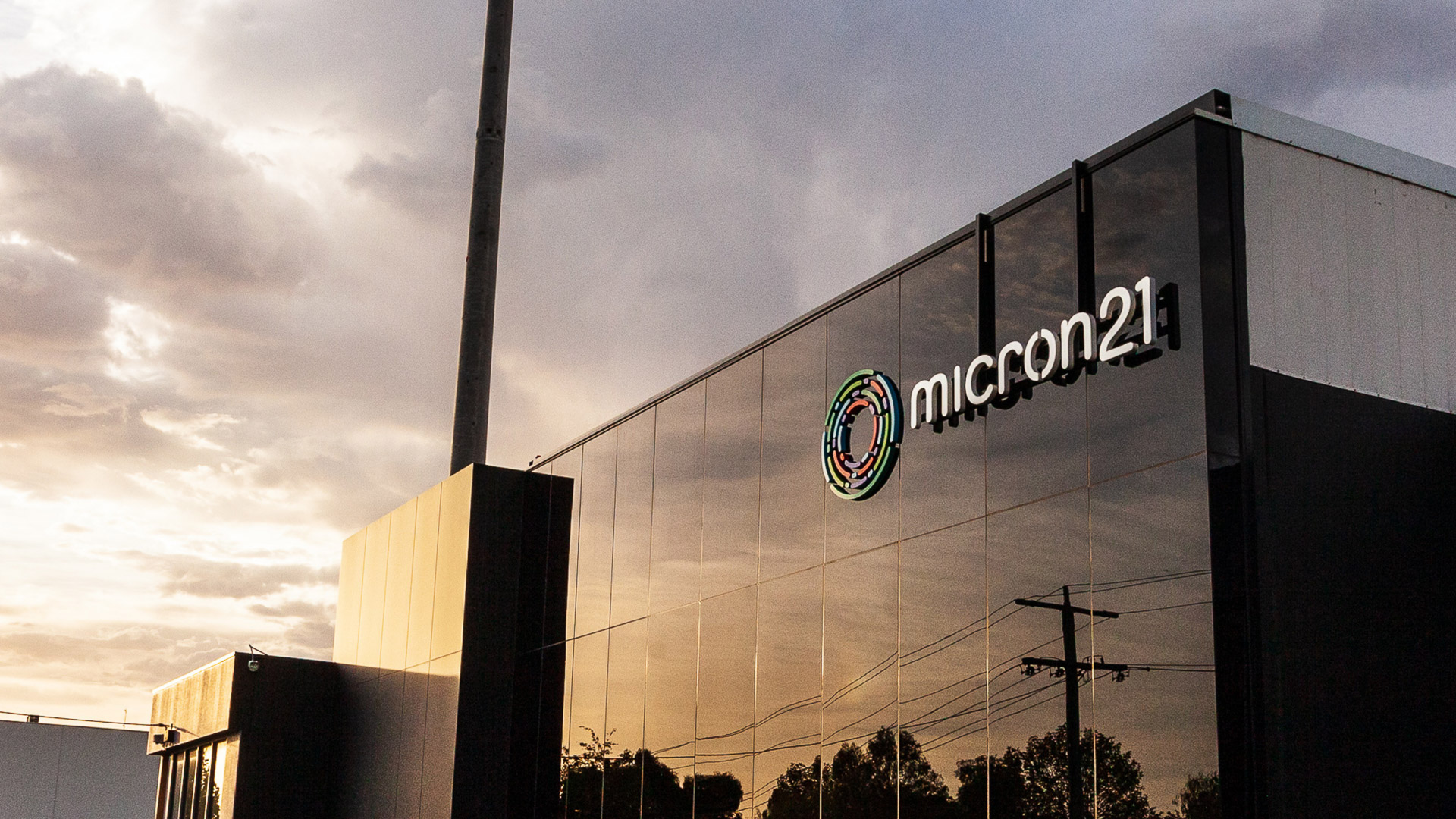
In March 2017, Micron21 became the first data centre operator in Australia to be awarded Tier IV Fault Tolerant Design Certification by the Uptime Institute. When news travelled across the industry, it raised an obvious question: how could Micron21, a privately owned facility in Melbourne’s outer east, achieve Tier IV when massive, multi-billion-dollar Australian data centre operators were certified Tier III?
The answer is that for Micron21, this was never about being the biggest. It was about building something better and different from everyone else, and having that claim independently verified by the world standard, the Uptime Institute, rather than relying on marketing brochures that say “built to Tier IV standards” without certification to back it up.
I still remember the day Craig Scroggie, CEO of NEXTDC, called me into a meeting. I was a NEXTDC customer at the time, and we talked about what I was building. Then, almost like magic, NEXTDC lifted their game and began their own journey towards Tier IV certification.
Micron21 was the first with design certification and set the standard in Australia, but we were in no rush to construct. We were building around a live customer workload, upgrading our facility with zero downtime for the customers already running inside it. That gave NEXTDC, which was constructing brand-new facilities from the ground up, the opportunity to complete construction first, and their B2 facility in Brisbane became Australia’s first Tier IV Certified Constructed Facility.
Micron21 was the pioneer that set the standard and pushed the bar higher for every data centre in Australia, and it’s great to see NEXTDC join the party. The result is exactly what the country needed: resilient, mission-critical infrastructure for Australian businesses and government departments that require nothing but the best.
The Uptime Institute tier system in 60 seconds
The Uptime Institute is the global authority on data centre performance, and its tier classification system is the benchmark the industry is measured against. There are four tiers, each building on the last:
- Tier I (Basic Capacity): a single path for power and cooling with no redundancy. Any failure or maintenance means downtime.
- Tier II (Redundant Capacity): adds redundant components (spare generators, UPS modules, cooling units), but still a single distribution path.
- Tier III (Concurrently Maintainable): every component can be taken offline for planned maintenance without affecting customer workloads. Availability of around 99.982%.
- Tier IV (Fault Tolerant): the facility can absorb any single unplanned failure, anywhere in its infrastructure, with zero impact on customer workloads. Availability of around 99.995%.
Crucially, a tier rating is only meaningful if it has been certified by the Uptime Institute. Plenty of facilities claim to be “built to” a tier standard; very few have submitted their design and construction to independent scrutiny and earned the certificate.
What makes a data centre Tier IV?
Tier IV is defined by one word: fault tolerance. But achieving genuine fault tolerance requires meeting four demanding requirements simultaneously.
1. No single point of failure
In a Tier IV facility, no single piece of infrastructure can fail and affect customer loads, whether it is a generator, a UPS, a chiller, a switchboard, a breaker, a pump or a cable. Every capacity system and every distribution path is duplicated, active and independent. When something fails (and in engineering terms, everything eventually fails), the facility absorbs the fault automatically, without human intervention and without customers ever noticing.
2. Continuous cooling
Tier IV is the only tier that mandates continuous cooling. Here’s why it matters: when mains power is lost, servers keep running on UPS batteries instantly, but mechanical cooling normally takes time to restart on generator power. In those minutes, a densely loaded data hall can heat up alarmingly fast. A Tier IV facility must maintain a stable temperature throughout any fault event, even in the window where the site has lost the ability to generate its own power and is running purely on UPS capacity. The white space must not heat up. Ever.
3. Compartmentalisation
Physical separation is just as important as duplication. Tier IV requires that redundant systems be compartmentalised: every critical asset must be contained within a fire-rated room or area, physically separating the multiple paths that power and cool the white space. The logic is simple: if both of your “redundant” power paths run through the same room, a single fire takes out both. In a Tier IV facility, a fire, flood or mechanical failure in one compartment cannot compromise the other path.
4. Facility-wide fault detection and monitoring
Finally, physical redundancy alone is not enough. A Tier IV facility must be able to detect, monitor and respond to every category of fault across the entire site: communication faults, fire and smoke, cooling anomalies and power events. Fault tolerance you can’t see isn’t fault tolerance; the facility has to know, instantly, when it is running in a degraded state so the fault can be repaired before a second event occurs.
Tier III vs Tier IV: a much bigger gap than most people think
On paper, Tier III and Tier IV look similar, separated by just a few thousandths of a percentage point of availability. In reality, they represent fundamentally different engineering philosophies.
Tier III is concurrently maintainable. That means the facility can perform planned maintenance, such as servicing a generator or replacing a UPS module, without taking customers offline. That is valuable. But here is the critical caveat: if an actual unplanned fault occurs, a Tier III facility is expected to fail. The design is not fault tolerant. Maintenance is planned; faults are not.
Tier IV is designed for the unplanned. The facility is expected to survive any single fault, anywhere, at any time, and continue full operation. One standard accepts downtime upon failure; the other is engineered so failure and downtime are decoupled entirely. That is not an incremental upgrade; it is a different class of infrastructure.
| Tier III | Tier IV | |
|---|---|---|
| Design philosophy | Concurrently maintainable | Fault tolerant |
| Planned maintenance | No downtime | No downtime |
| Unplanned single fault | Downtime expected | Zero impact on customer load |
| Availability | ~99.982% (~1.6 hours downtime/year) | ~99.995% (~26 minutes downtime/year) |
| Continuous cooling | Not required | Mandatory |
| Compartmentalisation | Not required | Mandatory: fire-rated physical separation of redundant paths |
N+1, 2N, 3N: how fault tolerance is actually engineered
Redundancy in data centre design is described relative to “N”, the capacity required to run the facility at full load.
- N+1 or N+2: full capacity plus one or two spare components. If a generator fails, a spare takes over.
- 2N: two complete, independent systems, each capable of carrying the entire load on its own. This is the classic Tier IV approach.
- 3N: three complete, independent systems. The facility can lose an entire system, and still have redundancy left over.
At Micron21, we went as far as 3N across our facility, power and cooling alike, backed by permanent on-site diesel generation. Why go beyond the standard? Because of who we serve and how. As a provider of high-density colocation services, we can have hundreds of customers within a single rack. When one rack carries that many businesses, the requirement to supply continuous power and cooling isn’t an engineering nicety; it is mission critical, multiplied.
So we created a data centre design built well above the standard, investing in technology designed never to let a customer down from a single fault. In fact, based on our design, we can withstand multiple simultaneous faults while still maintaining customer services. The Uptime Institute certifies you to survive one fault; we engineered for more than one, because our customer density demanded it.
Tier IV thinking beyond the building
Here’s something the certification documents won’t tell you: Tier IV is a mindset, not just a building specification. Once you accept the premise that faults will happen, and commit to designing systems that survive them, you start applying that thinking to everything.
At Micron21, we extended the same philosophy to almost everything we build: our mCloud cloud platform, our GPU-as-a-service offering, and our global network, AS38880. Each is designed on the assumption that faults will occur, with automated systems that detect failures and recover automatically to minimise downtime for customers. Our mCloud storage, for example, replicates data across three geographically separate data centres, so even a site-level event can’t touch customer data. A fault-tolerant building running a fragile platform would be a wasted investment; the resilience has to run through every layer.
Questions to ask your hosting or colocation provider
If there is one practical takeaway from Micron21’s certification journey, it is this: make providers prove their claims. “Built to Tier IV standards” is easy to say and impossible to verify. Certification is the proof. Before you trust a facility with your business, ask:
- Is the facility actually certified by the Uptime Institute, or just “designed to” a tier standard? Ask to see the certificate; certifications are listed publicly on the Uptime Institute website.
- What happens during an unplanned fault, not just planned maintenance? Will my services stay online if a UPS, chiller or switchboard fails?
- Is continuous cooling guaranteed during a power event, including while the site is on UPS capacity?
- Are redundant power and cooling paths physically compartmentalised in fire-rated rooms?
- What level of redundancy is deployed: N+1, 2N, or higher?
Frequently asked questions
What does Tier IV mean in simple terms?
A Tier IV data centre is fault tolerant: any single piece of power, cooling or distribution equipment can fail unexpectedly and customer services keep running without interruption. It is the highest rating in the Uptime Institute’s classification system, with availability of around 99.995%.
Which was the first Tier IV data centre in Australia?
Micron21 was the first data centre in Australia to achieve Uptime Institute Tier IV Fault Tolerant Design Certification, awarded in March 2017 at our Melbourne facility. NEXTDC’s B2 facility in Brisbane subsequently became Australia’s first Tier IV Certified Constructed Facility.
Is Tier IV worth it for my business?
It depends on the cost of downtime. If an outage means lost revenue, regulatory exposure or reputational damage (as it does for government, finance, healthcare and any business that lives online), then hosting in a Tier IV facility is the closest thing to an insurance policy the physical world offers.
The bottom line
Tier IV is the difference between a data centre that handles maintenance gracefully and one that handles reality gracefully. Faults happen: breakers trip, chillers fail, mains power disappears. The only question is whether your infrastructure was designed for that moment.
So if you are looking for an online home for your business, whether colocation, cloud, or anything in between, make sure it’s hosted in a certified Tier IV data centre. Your customers will never know about the faults that didn’t take you offline. And that’s exactly the point.
Want to see Tier IV up close? Get in touch with the Micron21 team or book a tour of our Melbourne facility.
