
Dedicated Server vs VPS in Australia: Which One Does Your Business Actually Need?
22 Jun 2026, by James Braunegg, CEO and Founder, Micron21
Dedicated server or VPS? It is one of the most common questions we get asked, and one of the most poorly answered on the internet, because most providers only sell one of the two and write their comparisons accordingly. Micron21 is a data centre operator that provides both physical dedicated servers and virtual private servers, so I have no horse in this race except the right fit for your workload.
The honest answer to dedicated server vs VPS in Australia depends on three things: how much direct control you need over hardware, how your workload scales, and, the part almost nobody talks about, what is actually underneath the VPS you are buying. That third point is where the industry hides its biggest secret, so let me explain all three properly.
What is a dedicated server?
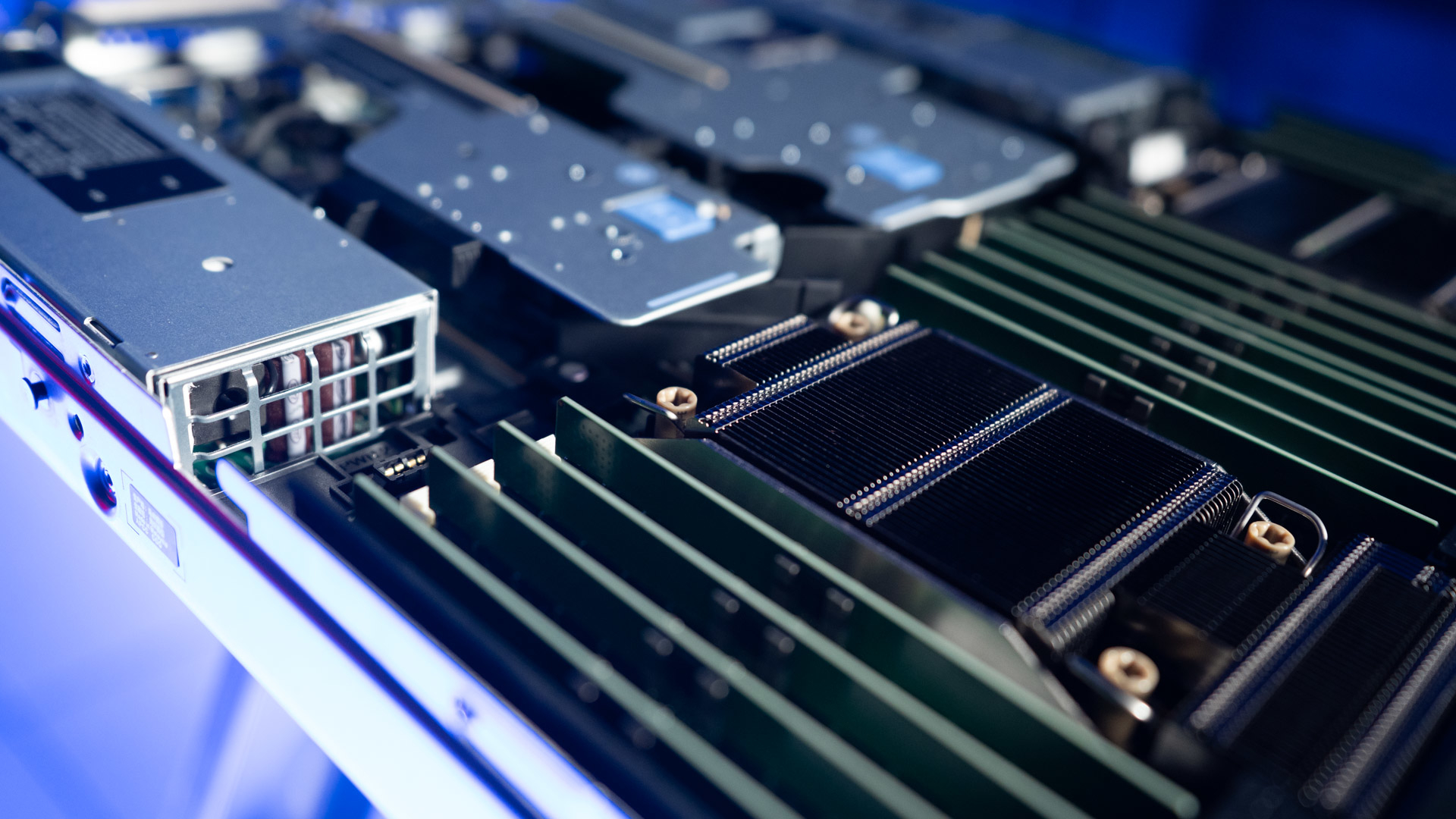
A dedicated server is exactly what it sounds like: raw access to physical hardware that is entirely yours. At Micron21 we build each dedicated server specific to your needs, with the exact number of CPU cores, the exact amount of memory and the precise physical storage your workload requires. Need accelerated compute? We can add dedicated GPU cards for AI, rendering or data processing workloads.
Because the bare metal is all yours, you can run any operating system and any application. There is no virtualisation layer between your software and the silicon, no other tenants, and no sharing. That translates into the most consistent performance money can buy: no virtualisation overhead, no contention, and complete freedom down to the BIOS. Many customers go a step further and run their own hypervisor on the hardware, whether VMware, Proxmox or anything else they like, turning one physical host into their own private virtual environment under their full control.
Now the trade-off, and I will be upfront about it because it is the single most important fact about dedicated servers: everything is contained within a single server. One power supply chain, one motherboard, one box. If redundancy matters to your application, you need to purchase multiple physical servers and build your own cluster across them. That is a perfectly valid architecture, plenty of our customers run exactly that, but it is your architecture to design and operate.
Managed or self-managed: who looks after the box?
The other question with dedicated hardware is who cares for it day to day. At Micron21 you choose the level that fits your team through our customer care plans: from self-managed (you drive, we keep the facility and network perfect), through reactive support (we are there the moment you raise your hand), up to fully proactive support, where our engineers monitor, patch and maintain your environment before problems become outages. For organisations that want the performance of bare metal without the operational burden, a managed dedicated server in Melbourne with proactive care gives you both: your hardware, our 24/7 eyes. The full details of what each plan promises are on our customer care page.
What is a VPS? (Careful: the word can mean almost anything)
A VPS, or virtual private server, is a virtual machine running on physical hardware operated by your provider. Simple enough. The problem is that "VPS" describes wildly different things depending on who is selling it, and the price tag usually tells you which one you are getting.
The budget VPS: one host, zero redundancy
At the budget end of the market, providers run virtual instances on a single physical server with zero redundancy. The economics are brutal: the provider's goal is to fit as many virtual instances on one host as possible. That creates two problems. The first is the noisy neighbour effect: when another tenant on your host hammers the disk or CPU, your performance suffers, and oversubscription (selling more virtual cores than the physical cores that exist) makes it worse. The second is far more serious: if that hardware fails, every customer on that host is offline until the hardware is physically repaired or replaced. Not failed over. Offline. For hours, sometimes days. If your VPS costs less than a takeaway dinner per month, this is almost certainly what you are standing on.
The enterprise VPS: what people really mean by a "cloud server"
At the enterprise end, a virtual instance is not tied to one box at all. On our mCloud platform, which is designed with no single points of failure, your instance spans multiple physical compute hosts and storage devices. If a physical node fails, your workload carries on, because no single piece of hardware owns it. This is what people actually mean when they say cloud server: VPS convenience with engineered resilience underneath.
It also changes what scaling means. An mCloud instance can start very small, a single core, and grow to hundreds of cores with massive amounts of memory and storage, without you ever migrating to new hardware. You scale the instance; the platform handles the physics.
The middle path: virtual dedicated servers
There is a third option worth knowing about, because it solves the noisy neighbour problem without giving up cloud resilience: the virtual dedicated server. This is dedicated cloud resource within a private cloud, reserved for you alone. Your cores are your cores; nobody else contends for them; and the instance still enjoys the platform's high availability. We provide this by default within mCloud. Many VPS providers cannot offer it at all, because their entire business model depends on packing as many instances as possible onto each host with no redundancy anywhere. Dedicated resources and oversubscription are opposites; you cannot sell both on the same box.
Dedicated server vs VPS: head to head
| Dedicated server | Budget VPS | mCloud cloud server | |
|---|---|---|---|
| Hardware | Entire physical server, built to your spec, GPU options | Slice of one shared host | Spans multiple hosts and storage nodes |
| Performance | Maximum and perfectly consistent | Variable (noisy neighbours, oversubscription) | Consistent, with dedicated-resource options |
| Hardware failure | Single box; cluster multiple servers for redundancy | Everyone on the host goes down until repair | Workload carries on; no single point of failure |
| Scaling | Buy more hardware | Limited by the single host | 1 core to hundreds, on demand |
| Control | Total: any OS, any hypervisor, BIOS-level | Your OS only | Your OS and instances, platform managed for you |
| Cost model | OpEx, fixed monthly | OpEx, cheap until it costs you | OpEx, scales with consumption |
How to choose: the questions that decide it
- Do you need direct control over hardware? Specific CPUs, GPU cards, your own hypervisor, BIOS-level tuning, licensing tied to physical sockets: dedicated server. This is the real dividing line, because both options are OpEx expenses; the question is not how you pay but what you control.
- Is consistent peak performance non-negotiable? Databases under heavy load, latency-sensitive applications and GPU workloads love bare metal. A virtual dedicated server on mCloud is the close second with resilience built in.
- Do you want redundancy without building it? A cloud server on mCloud gives you survival of hardware failure as a platform feature rather than an architecture project.
- Will your workload grow or fluctuate? Scaling an mCloud instance is a slider; scaling dedicated hardware is a purchase order.
- Unsure? Mix them. Plenty of our customers run a dedicated server for the database with cloud servers for the application tier, all inside one facility on one network.
Whichever you choose, the foundations matter more
Here is the uncomfortable truth about this entire debate: not all cloud servers are equal, and neither are all dedicated servers. The quality depends on the hardware used, the network, the data centre, the platform design and high availability features, and the SOC and NOC support behind it. A premium VPS in a fragile facility is still fragile. A dedicated server behind a congested network is still slow.
At Micron21, both options stand on the same foundations: our Uptime Institute certified Tier IV data centre with 3N power and cooling, our AS38880 global network with more than 2,000 BGP peers and built-in DDoS protection with global scrubbing, our 24/7 Australian SOC and NOC, and a 100% Australian family owned, sovereign operation that is IRAP assessed and ISO 27001 certified. Whether your workload lands on bare metal or on mCloud, it inherits all of it.
Frequently asked questions
Which is better in Australia, a dedicated server or a VPS?
Neither is better; they solve different problems. A dedicated server gives you an entire physical machine with maximum performance and total hardware control. A quality VPS or cloud server gives you scalability and built-in resilience at a lower entry cost. The deciding factor is whether you need direct control over physical hardware.
What is the difference between a cheap VPS and a cloud server?
A cheap VPS typically lives on one physical host with no redundancy: if that host fails, every customer on it is offline until repairs are made, and oversubscribed resources mean inconsistent performance. A true cloud server, like an mCloud instance, spans multiple physical hosts and storage nodes with no single point of failure, so hardware failure does not take you down.
Can I get a managed dedicated server in Melbourne?
Yes. Micron21 provides dedicated servers built to your exact specification in our Melbourne Tier IV data centre, with customer care plans ranging from self-managed through reactive to fully proactive support, where our 24/7 on-site team monitors and maintains your environment for you.
The bottom line
The dedicated server vs VPS question is really a control vs platform question. If you need the whole machine, the exact silicon and the freedom to run anything, we will build you a dedicated server to your precise spec, with GPUs if you want them and a care plan that matches your team. If you want infrastructure that scales from one core to hundreds and shrugs off hardware failure, mCloud is the answer, including virtual dedicated resources that budget providers structurally cannot offer. And because Micron21 provides both, in the same sovereign Tier IV facility, on the same global network, you can choose per workload instead of per provider.
Tell us what you are running and we will tell you honestly which one fits, even if it is the cheaper one. Talk to the team.
